Add Row
Add Element
cropper
update
Bay Area Business
update
Add Element
  • Home
  • Categories
    • Business News
    • Retirement Planning
    • Investing
    • Real Estate
    • Tax Planning
    • Debt Management
    • Bay Area Business Spotlight
    • Tech Industry Trends
    • How I got started
    • Just opened
    • Sustainability and Green Business
    • Business Financing
    • Industry Spotlights
    • Bay Area News
    • Bay Area Startups
  • AI Business Tech
April 12.2025
2 Minutes Read

Will Trump’s Policies Revive Stocks Amid Rapid De-dollarization Effects?

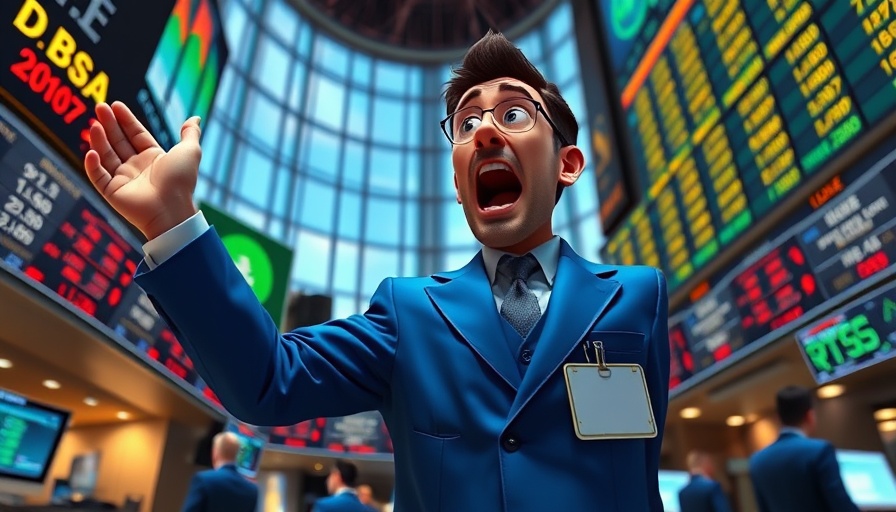
Trader reacting to de-dollarization impact on stocks.

Trump’s Influence on Stock Markets: A Delicate Balance

As the landscape of global finance continues to shift, the role of political figures becomes increasingly significant, particularly former President Donald Trump, whose policies could provide critical support for the U.S. stock market. By advocating for tariff exemptions and other favorable measures, Trump has the potential to inject confidence back into investors, thus rescuing stocks from potential decline. However, this optimistic view does not extend to the bond and currency markets, which appear more resistant to political influence and changes in market sentiment.

The De-dollarization Trend: Impact on Global Markets

In recent years, one of the most notable trends is the rapid de-dollarization, a process in which countries seek alternatives to the U.S. dollar for international trade. This movement could significantly undermine the dollar's dominance and create a ripple effect across various financial sectors. Countries exploring trade agreements with alternative currencies may result in a more cautious bond market, as investors reassess their strategies amidst shifting currency dynamics.

Looking Ahead: Economic Implications for Businesses

Business professionals must keep a close watch on both stock and bond markets as these trends evolve. An understanding of these dynamics is essential for making informed investment decisions and capitalizing on potential opportunities amid turbulence. Aligning business strategies with these economic indicators can be vital for optimizing growth, particularly for startups and tech industries that thrive on market stability.

Conclusion: Adapting to Shifting Financial Realities

In conclusion, while Trump's actions may sway the stock market positively, the bond and currency markets appear to be on a different trajectory. Business professionals should be prepared to adapt to these changes, leveraging insights from market analysis and economic forecasts to navigate their strategies effectively. Staying informed will remain crucial for identifying and seizing opportunities for growth in this rapidly evolving financial landscape.

Business News

8 Views

0 Comments

Write A Comment

*
*
Related Posts All Posts
03.05.2026

The Agent Boom is Splitting the Workforce: Are You a Builder or a User?

Update Understanding the Agent Boom in the WorkplaceThe year 2026 is emerging as a pivotal moment for artificial intelligence, particularly with the rise of agent-centric technologies. This shift is characterized by a growing divide between those who build and those who use these advanced tools. As organizations increasingly adopt agent-based systems, such as Claude Code and Anthropic's Claude Cowork, the workforce is being split into two distinct groups: builders and users. Builders are those who delve into the intricacies of these systems while users adapt to them.The Technical Divide: Builders vs. UsersOne of the most notable trends is the emergence of no-code tools that allow users to create and manage agents without needing extensive programming knowledge. However, even these platforms have technical barriers. For many, the notion of just 'talking to an agent' to perform tasks is far from reality. Builders, who thrive on experimentation, often navigate complex integrations and technical processes, while the average worker finds themselves unprepared for such discomfort and uncertainty.The Cultural Shift in WorkplacesThis segmentation in the workforce is not just a technological issue; it reflects a deeper cultural shift in how we perceive authority and problem-solving in professional settings. Traditional office culture, where employees call IT for assistance, is being challenged by a new paradigm where experimenting with technology is encouraged. This change may be daunting for many workers but presents a unique opportunity where those willing to engage with this technology can pave the way for innovation and growth.Navigating the Future: Opportunities and ChallengesMoving forward, the challenge for organizations will be to bridge the gap between builders and users. Companies that foster an environment where both groups can thrive will likely excel. By encouraging a culture of continuous learning and adaptation, businesses can harness the potential of the agent boom while preparing all employees for the future workplace, which will increasingly integrate AI.

03.05.2026

Navigating Post-Rejection Communication: What Hiring Managers Should Know

Update Understanding the Dynamics of Interview Rejections The world of job applications is fraught with competition and disappointment. When candidates don’t receive the desired news, it can trigger a complex array of emotions. Many don’t know how to professionally navigate the aftershocks of rejection. A poignant case emerged when a rejected candidate became increasingly insistent on understanding why he was not hired for a position he felt he was overqualified for. This begs the question: how should hiring managers respond to persistent inquiry? The Importance of Clear Communication One of the critical lessons from this situation revolves around communication. When faced with rejection, candidates often desire feedback to better understand their standing. According to insights from Board Infinity, interviewing is not merely about skill matching but about an alignment between individual experience and the company's needs. A proper follow-up communication not only acknowledges rejection but can also provide insights that help candidates improve their future applications. Can Honesty Enhance Future Opportunities? When considering how to respond to the candidate's insistence, it's essential to weigh the potential benefits of honesty. Providing constructive feedback, especially when delivered kindly, could help the candidate recalibrate their expectations. The right feedback can enlighten a candidate to the disparities between their qualifications and the job's requirements, steering them toward more suitable opportunities. Strategies for Handling Challenging Situations Given the constant evolution in workplace culture and communication, companies are encouraged to maintain open doors, even after rejection. According to expert insights, by replying to a candidate—even in a limited capacity—it can reinforce a culture of respect and empathy. This positive approach not only aids individual candidates but fosters a robust company image in a competitive job market. Conclusion: A Call for Empathy in Hiring Practices The core of effective hiring practices lies in compassionate communication. By ensuring candidates understand the rejection and fostering an empathetic approach, companies can enhance their employer brand while preparing candidates for future roles. As we navigate potential growth opportunities in our careers, using rejections as a learning tool is pivotal. Hiring managers may face many messages from rejected candidates, but responses grounded in empathy could reinforce a positive company culture and improve the overall candidate experience. If you’re a hiring manager facing similar challenges, consider how you might foster supportive communication with candidates. Feedback doesn't just help the individual; it elevates workplace culture and aligns with future innovation in hiring practices.

03.05.2026

The Samsung Galaxy S26 Ultra: Are Incremental Upgrades Enough for Innovation?

Update The Samsung Galaxy S26 Ultra: A Device Stuck in the Past? At this year's Mobile World Congress 2026 in Barcelona, Samsung showcased its latest flagship smartphone, the Galaxy S26 Ultra. However, instead of excitement, the device has sparked conversations about its lack of significant innovation, with many tech analysts questioning whether Samsung is losing its edge in the smartphone market. Why the Galaxy S26 Ultra Feels Like Deja Vu The Galaxy S26 Ultra is essentially an iterative update with only minor design tweaks and hardware upgrades. Users might hardly notice any differences at a glance, as the phone retains much of the same design language as its predecessors. Samsung has slimmed down the device by 0.3mm and replaced the titanium frame with aluminum, but these changes are incremental and don’t impact usability significantly. Weak Upgrades Under the Hood Despite the introduction of Qualcomm’s Snapdragon 8 Elite Gen 5 processor, other specifications seem underwhelming. The battery capacity remains static at 5,000mAh, while competitors offer advanced fast-charging systems. Moreover, the camera setup, particularly the telephoto lens—which has had no significant update since 2002—remains a glaring missed opportunity for Samsung to innovate. The Role of AI in the Galaxy S26 Ultra Amidst the criticism, Samsung is emphasizing artificial intelligence and smart features in its new lineup. The integration of AI aims to enhance the user experience by providing features like a privacy display that prevents others from viewing sensitive information on the screen. Bixby, Samsung's virtual assistant, is evolving to act more like an AI agent, assisting users in a more intuitive manner. However, whether these AI features constitute a significant value-add remains to be seen. Is Samsung Missing the Opportunity for Innovation? In a world where smartphone capabilities are rapidly advancing, merely enhancing existing features might not be enough to retain Samsung's competitive edge. As seen with the S26 Ultra, the emphasis seems to shift towards incremental improvements rather than groundbreaking innovations. Other manufacturers are adopting faster charging technologies and investing in features that appeal to the changing needs of consumers. Looking Ahead: What Samsung Must Do For Samsung to stay relevant in the competitive smartphone market, it must rethink its approach to innovation. A focus on user-experience-driven design, combined with a keen understanding of emerging technology trends, could potentially redefine what flagship phones should offer. As the consumer landscape evolves, Samsung must embrace a bold direction, or risk becoming just another name in the crowded smartphone market. As technology enthusiasts, it’s vital for us to evaluate whether brands are genuinely innovating or merely updating. Following the Galaxy S26 Ultra’s lukewarm reception, it's clear that the future of smartphone design and technology hinges on creating not just smart devices, but transformative experiences. Stay informed about the latest in tech innovation and product design.

Terms of Service

Privacy Policy

Core Modal Title

Sorry, no results found

You Might Find These Articles Interesting

T
Please Check Your Email
We Will Be Following Up Shortly
*
*
*