Add Row
Add Element
cropper
update
Bay Area Business
update
Add Element
  • Home
  • Categories
    • Business News
    • Retirement Planning
    • Investing
    • Real Estate
    • Tax Planning
    • Debt Management
    • Bay Area Business Spotlight
    • Tech Industry Trends
    • How I got started
    • Just opened
    • Sustainability and Green Business
    • Business Financing
    • Industry Spotlights
    • Bay Area News
    • Bay Area Startups
  • AI Business Tech
March 15.2025
3 Minutes Read

Why Xi Jinping's Absence at the EU-China Summit Matters for Businesses

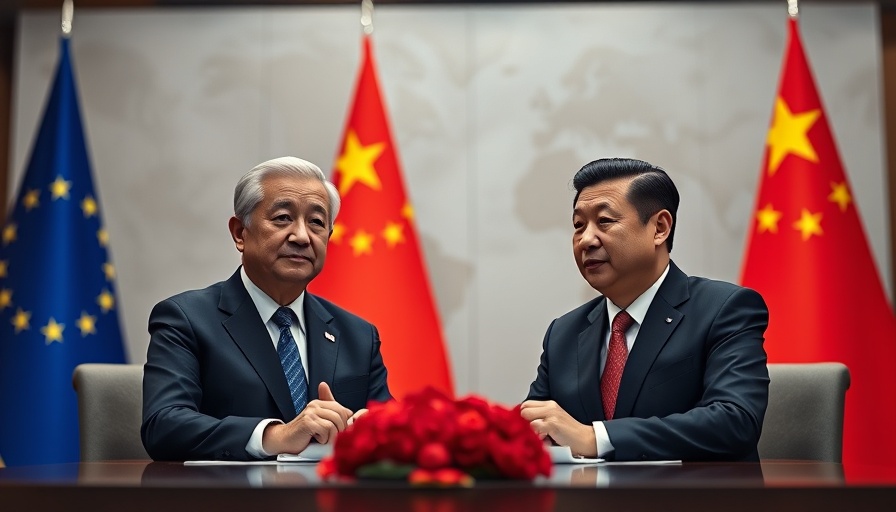
EU-China summit held virtually, leaders on screen with flags in background.

Xi Jinping’s Snub: A Sign of Wider Tensions?

On December 7, 2023, Chinese President Xi Jinping notably absent from a significant EU-China summit, raises eyebrows and questions about the trajectory of relations between China and Europe. This summit was crucial as it aimed to address strategic and global economic issues; however, Xi’s no-show suggests a deeper rift that cannot be easily bridged.

Understanding the Context: EU-China Relations in Flux

Over the years, the relationship between the EU and China has been described as complex. The EU considers China both a partner and a systemic rival. Recent conflicts, especially regarding trade, human rights, and geopolitical strategies, have made this relationship fraught with tension. The EU’s recent moves to reduce dependence on China, paired with Xi’s reluctance to engage, further complicates diplomatic outreach efforts.

What Prompted Xi’s Absence?

Xi's absence could stem from multiple issues. The EU and China have been struggling to find common ground over vital issues such as the situation in Ukraine, where Europe has pushed for a stronger stance against Russian aggression. Xi’s previous meetings with Western leaders, particularly regarding sanctions against Russia, have characterized the relationship as one fraught with misunderstandings and competing interests.

The EU’s Reaction: Implications for Future Dialogue

The EU’s leadership, including President Ursula von der Leyen, expressed disappointment over Xi's non-participation, prompting discussions on how this impacts future engagements. EU officials were prepared to address crucial topics, including China’s economic policies, market access, and adherence to international norms—a dialogue Xi's absence effectively stalled. It raises serious concerns about the sustainability of constructive dialogue moving forward.

Comparative Perspectives: Past Summits vs. Now

Past summits have provided mixed results, often described as a 'dialogue of the deaf', especially when the gap between EU objectives and China’s policies widens. Josep Borrell, the EU’s top diplomat, criticized previous meetings for failing to yield results. This failure to communicate effectively highlights the need for a reassessment of engagement strategies that are now more essential than ever in navigating increasingly conflicting interests.

Prospects Ahead: Can Dialogue be Reinvigorated?

Despite the current low point, the future of EU-China relations is uncertain. Cooperation in key areas like climate change and trade regulation holds potential. China recently lifted some visa restrictions for EU citizens, indicating a willingness to engage, albeit selectively. As discussions around sustainability and digital transformation in business emerge, both parties may yet find common ground.

Financial and Economic Ramifications for the Bay Area

The implications of deteriorating EU-China relations extend beyond Europe and Asia. For businesses in the Bay Area and Silicon Valley, understanding these dynamics is crucial. Trade disruptions can affect not only tech supply chains but also venture capital investments that often look to China as both a market and a partner in innovation.

Conclusion: The Call for Constructive Engagement

For stakeholders in the Bay Area, the evolving landscape of international relations calls for vigilance. As businesses navigate the complexities of potential trade barriers or changes in regulatory landscapes, fostering resilience and strategic adaption remains critical. Staying informed about these geopolitical shifts prepares businesses to strategically position themselves in an unpredictable marketplace.

Business News

10 Views

0 Comments

Write A Comment

*
*
Related Posts All Posts
03.06.2026

Why Luckin Coffee's Acquisition of Blue Bottle Signals the Future of Coffee

Update Luckin Coffee's Bold Acquisition of Blue Bottle Explained The coffee landscape is shifting dramatically, with the recent acquisition of Blue Bottle Coffee by Luckin Coffee marking a significant chapter in this evolving story. The deal, valued at around $400 million, showcases Luckin's aggressive strategy to establish itself as a formidable competitor against coffee titan Starbucks. This acquisition is not merely a financial transaction; it reflects a larger narrative about innovation and market dynamics in the global coffee industry. The Coffee Wars Heat Up Starbucks, with its extensive network of approximately 40,000 stores, has long dominated the coffee market, boasting revenues of $37 billion. Its current CEO, Brian Niccol, has been implementing a design-led turnaround strategy that is bringing customers back. However, Luckin Coffee, which has rapidly expanded its presence, now operates around 31,000 stores globally—representing a growth rate of 39% in just one year. Unlike Starbucks, which tends to focus on brick-and-mortar experiences, Luckin has harnessed the power of technology with a smaller store footprint and a strong emphasis on digital ordering. The Third Wave Coffee Movement Blue Bottle Coffee represents the third wave coffee movement—a concept that celebrates high-quality coffee through artisanal brewing methods and unique flavor profiles. This trend may have less traction with mainstream consumers, given the rising preference for quick, value-oriented options such as those offered by Dunkin’ and Tim Hortons. Even Starbucks has found its share of challenges in high-end coffee segments, illustrated by its closure of several "reserve" stores that catered to this market. The Future of Coffee Consumption The acquisition of Blue Bottle positions Luckin Coffee to tap into this niche at a time when consumer tastes are evolving. As iced coffee and convenience drinks gain popularity, influenced by modern urban lifestyles, the pressure is on for brands to innovate continuously. Luckin’s strategy suggests a willingness to experiment and adapt, essential tools in a saturated market where traditional players are feeling the heat. Conclusion: The Customer is Key This latest move in the coffee wars underscores the critical importance of understanding consumer behavior and market trends. While the $400 million price tag for Blue Bottle might seem steep, it symbolizes more than just financial investment; it represents a strategic alignment towards enhancing brand offerings. As competition heats up, staying aligned with consumer preferences—through effective branding and innovative product strategies—will be paramount for success. For readers keen on exploring the intersections of innovation in business and consumer behavior, now is the time to dive deeper into understanding these shifts within the coffee industry. What’s your take on this brewing rivalry?

03.06.2026

Wendy's Unveils $100K Chief Tasting Officer Role: Apply Now!

Update The Playful Shift in Fast Food Marketing Wendy’s has taken a bold step into the realm of brand engagement with its latest initiative—the search for a "Chief Tasting Officer" (CTO). Promising a six-figure salary of $100,000, this unique role is not just about taste-testing burgers; it’s about reshaping how fast-food chains engage with their audience through humor and personality. The fast-food giant is leveraging the growing trend of influencer marketing, urging applicants to showcase their creativity through entertaining video submissions. Understanding the Role of a Chief Tasting Officer At its core, the CTO position, albeit an independent contractor role, emphasizes the importance of content creation in modern marketing strategies. The selected individual will be tasked with creating engaging promotional videos that resonate with the company's youthful and playful ethos. As Wendy’s invites candidates to share why they should be the chosen CTO, they are not just hiring an extraordinary taste-tester; they are searching for a brand ambassador capable of creating impactful narratives around its offerings. Why Humor is Key in Brand Strategy Wendy’s has become notorious for its witty and humorous banter on social media, making bold statements about competitors while shining a light on its products. This move to hire a Chief Tasting Officer not only amplifies its comedic marketing approach but also enriches its brand storytelling. By poking fun at traditional employment roles through its job advertisement, Wendy's transforms recruitment into an entertaining experience, significantly increasing engagement. Broader Implications for Fast Food Industry Trends Wendy's initiative comes at a time when the fast-food industry is looking to innovate beyond menus. The intersection of food culture and content creation has given rise to a new era referred to as the "creator economy," where consumers now expect brands to entertain and inform. The clever branding strategy employed by Wendy’s not only makes a strong statement but sets a precedent for how companies should approach marketing in an age driven by social media influences. Consumer Engagement through Content Creation The Chief Tasting Officer contest reflects a significant trend in digital transformation where audiences want to be more than just passive consumers; they expect to actively participate in the brand experience. By utilizing Instagram and TikTok as platforms for video submissions, Wendy’s taps into the vibrant communities already cultivated on these networks. This strategy not only aligns with current advertising trends but also demonstrates the expanding role of digital platforms in restaurant marketing strategies. Conclusion: Embrace Your Creative Side Wendy's unique approach to hiring illustrates the evolving landscape of marketing, driven by creativity, humor, and consumer interaction. For those interested in competing for the role of Chief Tasting Officer, now is the time to unleash your inner foodie and showcase your personality. Submissions for the contest close soon, so don't miss out on the chance to possibly lead the fast-food company's content revolution!

03.06.2026

The Game-Changer: Why Apple’s $599 MacBook Neo is so Significant

Update The Affordable Evolution: Apple’s MacBook NeoApple has long held a reputation for premium pricing, yet the recent launch of the $599 MacBook Neo heralds a significant shift in its strategy. This entry-level laptop not only targets students and small businesses but also seeks to compete directly with budget-friendly laptops like Chromebooks, which dominate the education sector.Breaking Barriers with AccessibilityBy pricing the MacBook Neo at just $599 for consumers and $499 for educational institutions, Apple aims to dismantle the barriers that have traditionally kept their products out of reach for many. This model is reminiscent of their successful Mac Mini, which began at $499—and served as an entry-point for many into the Apple ecosystem. With its attractive pricing and features such as a 13-inch Liquid Retina display and built-in AI capabilities, the Neo invites both newcomers and seasoned Apple fans to explore its offerings.Colors That Resonate with UsersAvailable in vibrant colors such as the nostalgic Citrus and Blush, the MacBook Neo reflects Apple’s commitment to both aesthetics and functionality. This design choice not only draws in consumers looking for a functional laptop but taps into emotional connections, harkening back to the colorful iMacs of the 1990s.Strategic Positioning in the MarketAccording to industry experts, the Neo represents one of Apple’s most significant product announcements in years, signaling a shift in how the company positions its MacBook offerings. Francisco Jeronimo from IDC emphasized that this entry-level price point opens the door to a broader audience, ultimately expanding Apple’s ecosystem. By lowering the entry barrier, Apple hopes to increase user engagement and service subscriptions, aiming for greater market share within a highly competitive landscape.Future Trends in Apple’s Product LineLooking ahead, Apple’s integration of AI technologies in its devices, including the Neo, points towards ongoing innovation. As AI capabilities evolve, they will likely enhance user experience across the board, making consumer interactions simpler and more intuitive. This integration is part of a larger trend in the tech industry, where AI and automation shape the future of product design and usability.Why It Matters: A Chance for Every UserThe launch of the MacBook Neo is more than just a pricing tactic; it symbolizes a transformation within Apple’s brand identity. As the tech landscape shifts, understanding consumer trends becomes crucial. With a focus on inclusivity in technology, Apple is not just offering a product but also a chance for more users to connect with its ecosystem. This move towards affordability represents a newfound commitment to making technology accessible to all demographics.

Terms of Service

Privacy Policy

Core Modal Title

Sorry, no results found

You Might Find These Articles Interesting

T
Please Check Your Email
We Will Be Following Up Shortly
*
*
*