Add Row
Add Element
cropper
update
Bay Area Business
update
Add Element
  • Home
  • Categories
    • Business News
    • Retirement Planning
    • Investing
    • Real Estate
    • Tax Planning
    • Debt Management
    • Bay Area Business Spotlight
    • Tech Industry Trends
    • How I got started
    • Just opened
    • Sustainability and Green Business
    • Business Financing
    • Industry Spotlights
    • Bay Area News
    • Bay Area Startups
  • AI Business Tech
April 17.2025
3 Minutes Read

Why Trump's Claim of a '100% Deal' with EU Matters for Bay Area Businesses

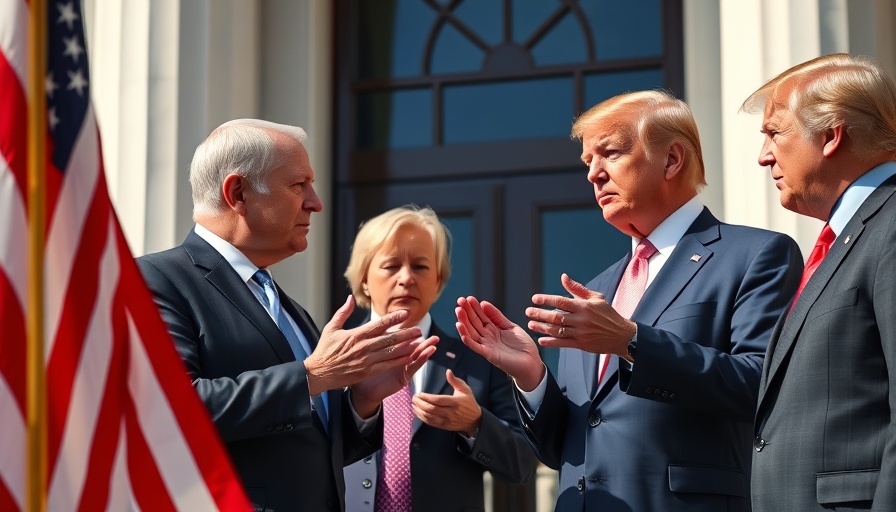
US EU trade deal discussion with prominent figures and American flag.

Trump’s Bold Claim: A Trade Deal with the EU Is Inevitable

Former President Donald Trump recently announced at a rally that the United States will "100%" reach a trade deal with the European Union. This statement echoes his administration’s earlier protective trade policies, including tariffs on foreign goods that were designed to strengthen American industry. Trump's declaration brings into focus the ongoing complexities of international trade amidst increasing global economic challenges.

The Significance of a US-EU Trade Deal

Establishing a trade deal with the EU could greatly benefit American businesses, particularly those in sectors like technology, agriculture, and manufacturing. If successful, this trade pact could pave the way for reduced tariffs, enhanced market access, and greater collaboration on regulatory standards. For Silicon Valley startups and Bay Area companies, an EU deal could mean wider opportunities for venture capital funding and strategic partnerships across the Atlantic.

Historical Context of US-EU Trade Relations

The U.S. and EU have a long history of trade agreements, with the Transatlantic Trade and Investment Partnership (TTIP) proposed during the Obama administration. However, negotiations stalled under Trump due to his focus on America First policies. The current climate presents a unique opportunity to revisit and re-negotiate these previous agreements within a new geopolitical framework.

Potential Challenges Ahead

As much as a trade deal may seem promising, it comes with its own set of challenges. Critics of Trump's trade policies have raised concerns over the implications of tariffs on American consumers and how they could impact inflation rates. The desire for job protection in local markets versus the need for global competitiveness will undoubtedly be hotly debated as negotiations progress.

Future Predictions: What Could a New Trade Agreement Look Like?

If a trade deal materializes, we can expect various outcomes for American businesses and consumers. It may usher in a new era of trade relations characterized by innovation and collaboration, especially in the tech sector, which relies heavily on international markets for talent and investment. Alternatively, a failure to establish such a deal could exacerbate supply chain disruptions and limit growth opportunities in affected sectors.

Local Impact on the Bay Area

For Bay Area businesses, especially those involved in the tech industry, the potential trade deal could mean significant economic growth. With the possibility of reduced import taxes on tech products and a more favorable international regulatory environment, companies in Silicon Valley may see increased demand both domestically and abroad. Additionally, as venture capital funding flows into cross-border collaborations, local entrepreneurs could benefit immensely.

Conclusion: Keep an Eye on Trade Developments

As negotiations for a US-EU trade deal advance, stakeholders across various sectors must stay informed. Understanding the implications and potential opportunities this may create for Bay Area businesses can empower decision-makers to navigate upcoming changes effectively. As Trump continues to push forward in this area, it's crucial for entrepreneurs and business leaders to prepare for a landscape that could present both unique challenges and unprecedented opportunities.

Business News

7 Views

0 Comments

Write A Comment

*
*
Related Posts All Posts
02.15.2026

Retail Investors Buzz About GameStop, Tesla, and AI Stocks This Week

Update The Buzz Around Top Stocks: What's Driving Investor Interest? This week, five stocks have captured the attention of retail investors, igniting discussions across social media platforms like X and Reddit's r/WallStreetBets. The buzz stems from a blend of retail hype, encouraging earnings reports, and the booming interest in artificial intelligence (AI) technologies. Investors remain captivated by GameStop, Tesla, Palantir, Amazon, and Nvidia, each showcasing distinct narratives that reflect broader market trends. GameStop: A Retail Favorite or a Fading Star? GameStop continues to be a focus for retail traders, especially as a meme stock. Despite this, the buzz surrounding GME seems to be waning. With a trading range of $19.93 to $35.81, the stock is currently hovering between $23 and $25 per share, reflecting a long-term decline of 10.71%. Even as retail investors remain bullish, a notable drop in Google search interest suggests that the meme-driven excitement is losing its mainstream appeal. Palantir: Navigating Uncertain Waters Palantir Technologies also finds itself at a crossroads. After experiencing a 9.55% annual return, the stock is currently trading between $128 and $131 per share. The company recently faced intense scrutiny following criticism from notable investors. Despite this, Palantir's robust revenue growth—reporting a remarkable 70% increase last quarter—suggests that it may still capitalize on AI demand despite valuation concerns. Investors are keen to see if this momentum can sustain. Amazon vs. Tesla: The Race for AI Dominance Amazon and Tesla stand out for their contrasting approaches to growth in the AI space. Amazon is on an aggressive investment path, with CEO Andy Jassy announcing a staggering $200 billion capital expenditure forecast for 2026, mainly targeting AI infrastructure. This initiative is proving essential as the company seeks to fortify its position against competitors. In contrast, Tesla is undergoing executive changes amid skepticism about its performance and expansion strategies. While the stock has increased by 17.17% over the year, constant questioning about Elon Musk's diversifying interests raised concern among investors about operational focus. Nvidia: Riding the AI Wave Nvidia is reaping the benefits of the AI boom, with an exceptional stock performance that has surged 38.18% over the year. Analysts remain overwhelmingly positive, with 94% rating the stock as a Buy or Strong Buy ahead of its earnings report later this month. As retail investors wait for the stock to break past the $193 mark, Nvidia stands as a stellar example of how AI demand is positively influencing market movers. Conclusion: The Retail Investor's Landscape The narratives surrounding these stocks underline the evolving nature of retail investing, showcasing the interplay between meme sentiment and substantial corporate developments. As AI continues to grow in importance, it will be interesting to see how these five companies adapt and ultimately succeed or falter in the angling landscape. Investors are advised to remain observant of market trends while considering the potential volatility and momentum shifts that may occur in the near future.

02.15.2026

Cango's AI Pivot Signals New ETF Opportunities: Will Power Supply Become the Game Changer?

Update Powering AI: Cango's Strategic Shift Beyond Bitcoin MiningCango Inc., once focused solely on Bitcoin mining, is making a landmark pivot towards AI-based computing infrastructure. With the cryptocurrency sector facing volatility, Cango's new direction highlights a critical demand for computing power—essentially reshaping their business model to focus on emerging technologies.The Growing Importance of AI InferenceAccording to Juliet Ye, Head of Communications at Cango, the company has identified a significant disconnect between the surging demand for AI computing power and existing infrastructure capabilities. MarketsandMarkets predicts that the AI inference market could grow to approximately $255 billion by 2030, underscoring the urgency for robust infrastructure to support this growth. Cango aims to bridge this gap, transforming its operations to align with the needs of an AI-driven future.Electricity: The New Currency in TechAs Cango transitions to AI, energy availability emerges as a critical asset. Ye notes, "Power has become the hard currency of the AI era." Current estimates indicate that U.S. data center electricity demand could potentially double by 2030. This critical need for electricity leads to increased investment in utilities and clean energy solutions, creating opportunities for exchange-traded funds (ETFs) that cater to this demand.Continuing the Evolution: From Miners to Infrastructure ProvidersCango's strategy includes repurposing its energy-connected mining sites into AI compute hubs, something not only beneficial for Cango but the entire crypto mining community. As mining operators consider following suit, Cango's move serves as a potential model for others looking to diversify their revenue streams beyond traditional cryptocurrency mining.Implications for Investors: Embracing the AI WaveThis transition could bolster various ETFs, particularly those focused on AI infrastructure and utilities. Funds like the Global X AI & Technology ETF (NASDAQ:AIQ) and the iShares Semiconductor ETF (NASDAQ:SOXX) position investors for growth opportunities in a tech-driven world. The intricate relationship between AI development and reliable power supply signals a rapidly evolving investment landscape.Looking Ahead: A Multi-Phase ApproachWith a clear roadmap ahead, Cango envisions a three-phase plan to deploy computing nodes, enhance operational efficiency, and develop a scalable AI platform that can sustain revenue streams. Their commitment to innovation not only creates its pathway but lays the groundwork for supporting a broader tech ecosystem.Cango's transformative approach exemplifies the responsiveness needed in today’s tech market, particularly as demand drives new opportunity in sectors like AI.

02.15.2026

Marco Rubio Advocates for Europe to Embrace Trump's Security Strategy

Update A New Era in U.S.-Europe Relations? At the recent Munich Security Conference, U.S. Secretary of State Marco Rubio made headlines by advocating for a renewed partnership between the U.S. and Europe. He emphasized a strategic alignment with former President Donald Trump's security agenda, marking a shift in how the U.S. engages with its European allies. Rubio's remarks signal a call for both parties to reshape global security institutions while addressing shared risks and challenges. Moving Beyond Globalization Rubio's comments reflect an ongoing concern that traditional Western policies, which have relied heavily on globalization and expansive social spending, may be undermining security and economic strength. He urged for a reassessment of these strategies, suggesting that stronger enforcement of borders and a renewed focus on national sovereignty are crucial to stabilizing Europe’s future. This aligns with the wider sentiment among some policymakers who feel that without a robust defense strategy, the West risks losing its forefront position in global affairs. Implications for Global Governance The Secretary of State also asserted that reforms in international institutions are necessary. However, rather than dismantling these structures, he proposed a careful process of change to manage today's complex security landscape. This approach could redefine how the U.S. collaborates with Europe, potentially leading to a stronger, more unified front against emerging global threats. Observational Insights on Rubio's Approach While delegates at the Munich conference appreciated Rubio's softer tone compared to previous discussions, skepticism remains about the underlying agendas. Observers noted that despite the friendly overtures, the core directive remains centered on Trump's policies. The U.S. still appears willing to operate unilaterally should shared interests not align, emphasizing America's desire to maintain its influence over European security trajectories. As the geopolitical landscape evolves, the implications of these discussions may shape future collaboration not only in Europe but also in other key regions. The direction given by U.S. leadership at forums like Munich could pave the way for significant shifts in international alignments and resource allocations, particularly in addressing security and economic challenges driven by globalization.

Terms of Service

Privacy Policy

Core Modal Title

Sorry, no results found

You Might Find These Articles Interesting

T
Please Check Your Email
We Will Be Following Up Shortly
*
*
*