Add Row
Add Element
cropper
update
Bay Area Business
update
Add Element
  • Home
  • Categories
    • Business News
    • Retirement Planning
    • Investing
    • Real Estate
    • Tax Planning
    • Debt Management
    • Bay Area Business Spotlight
    • Tech Industry Trends
    • How I got started
    • Just opened
    • Sustainability and Green Business
    • Business Financing
    • Industry Spotlights
    • Bay Area News
    • Bay Area Startups
  • AI Business Tech
April 15.2025
3 Minutes Read

Turkey's Democratic Future: A Global Perspective on Its Importance

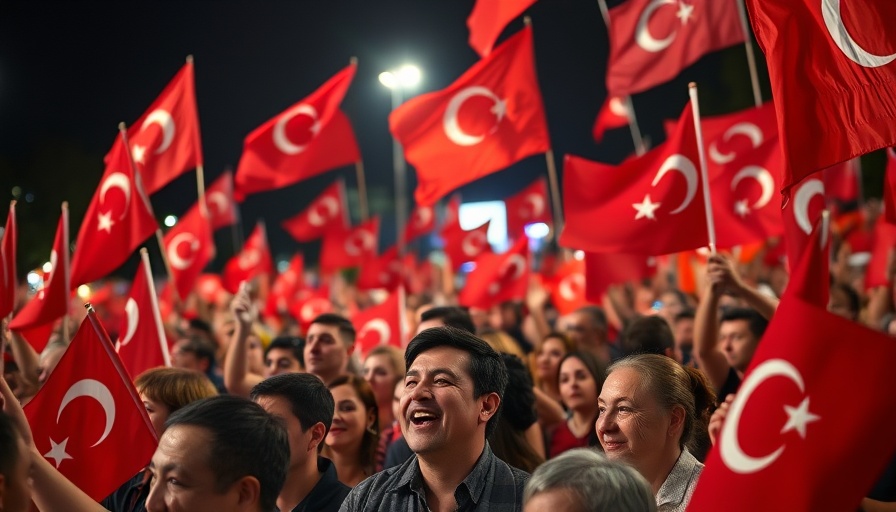
Turkish citizens at a rally, hopeful for Turkey's democratic future.

Understanding Turkey's Democratic Landscape

In recent years, Turkey has emerged as a pivotal player in global politics, particularly concerning its democratic development. The vitality of its democracy not only affects the lives of its citizens but also extends its influence across regions, affecting international relations, trade, and global ideological balances.

The Historical Context of Turkey's Democracy

Turkey's journey toward democracy has been fraught with challenges, oscillating between periods of liberal reforms and authoritarian backslides. The founding principles of the Republic of Turkey in 1923, led by Mustafa Kemal Atatürk, emphasized secularism and modernity. However, the interplay of various political forces has continually shaped its democratic narrative. In this context, the intensity of recent elections and governmental changes serves to highlight the critical importance of democratic structures in safeguarding citizen rights and broader region stability.

Why Democracy in Turkey Matters Globally

Turkey is strategically situated at the crossroads of Europe and Asia, making it an essential actor in geopolitical affairs. Its democratic stability is crucial not just for Turkish citizens but also for emerging democracies worldwide. A well-functioning democracy in Turkey can inspire other nations, particularly in the Middle East and North Africa, demonstrating that democratic principles can withstand various challenges.

Potential Risks of Authoritarianism

Observing Turkey's recent political climate raises concerns about authoritarian tendencies, particularly under President Recep Tayyip Erdoğan. These shifts undermine not only the democratic framework within Turkey but also impact relations with the West, especially NATO allies. A decline in democratic practices can stifle innovation and deter foreign investment, potentially impacting sectors vital to Turkey's economy, such as technology and trade.

Diverse Perspectives on Turkey's Future

It’s essential to recognize the varied perspectives regarding Turkey's path forward. Some analysts argue that Erdoğan's administration has effectively maneuvered the country through economic trials and external pressures, while others view the increasing centralization of power as a direct threat to civil liberties. This conversation surrounding Turkey's democracy is not just a national issue but also embodies a broader global tension between authoritarianism and democratic governance.

Future Predictions: Turkey's Role on the Global Stage

As we look to the future, the impact of Turkey's democratic state on international affairs will continue to grow. The evolving landscape of global politics suggests potential partnerships and tensions not only within the region but also with powers such as the United States, Russia, and the European Union. An entrenched democratic framework can position Turkey as a stabilizing force in an increasingly unpredictable world.

Actionable Insights: What Can You Do?

For global citizens and policy advocates alike, understanding the implications of Turkey's democracy is vital. Engaging in dialogue, supporting organizations that promote democratic processes, and staying informed about Turkish politics can contribute to a broader understanding of international relations and global democracy movements. The future of Turkey could serve as a bellwether for other nations navigating similar challenges.

In conclusion, Turkey's democratic journey is fundamental not only for its national identity but also for global order. As this narrative unfolds, stakeholders and citizens alike must remain vigilant in promoting democratic values that benefit not just Turkey, but the world at large.

Business News

12 Views

0 Comments

Write A Comment

*
*
Related Posts All Posts
01.24.2026

Nigel Farage's Role at Davos: Implications for Bay Area Startups and Investors

Update Nigel Farage's Unexpected Role at Davos In an intriguing turn of events, British politician Nigel Farage, known for his controversial opinions and leadership in the Brexit movement, attended the World Economic Forum in Davos this year under unusual circumstances. Farage was on hand not only to represent his views but as an adviser to an Iranian billionaire, shedding light on cross-continental connections that blend politics, economics, and business strategies. The Iranians: A New Power Player in Global Economics The Iranian billionaire gives a unique twist to the typically Western-centric narrative of Davos. As sanctions and political tensions shape the Persian economy, Farage's involvement illustrates a potential thaw in relations or, at the very least, an engagement with a non-traditional partner. This development prompts questions about future collaborations and investments that may emerge from such alliances. Silicon Valley and Global Connections This intersection of business and politics couldn't come at a better time for Silicon Valley startups looking for new opportunities amidst a landscape of fluctuating economic conditions. The implications of Davos discussions ripple outward, impacting local business updates and providing insights into employment trends and corporate governance. There's potential for new partnerships, particularly within the realms of digital transformation and sustainable business practices. Investors and Startups: What Does This Mean for Business? As the Bay Area economy continues to evolve, the influence of characters like Farage signals a changing world where cross-border relationships can lead to significant venture capital funding opportunities. This year, we may see a flurry of activity with mergers and acquisitions fueled by insights gained from Davos. If Iranian businesses begin collaborating with Bay Area tech firms, it could reshape startup ecosystems and promote innovative business strategies. Corporate Social Responsibility in a Globalized Economy Farage's attendance at Davos amidst his ties to an Iranian billionaire raises interesting questions about corporate social responsibility within this new global economy. Traditional boundaries are being blurred, with businesses navigating a landscape that demands sustainability and ethical practices while also pursuing profits. As corporate leadership evolves, how will companies balance these competing interests? Future Predictions for Tech and Business Trends With the current climate, what can businesses in the Bay Area expect moving forward? Economic forecasts suggest that ongoing dialogues initiated during high-stakes forums like Davos could lead to future growth. Tech industry updates are likely to reflect an eagerness for innovation propelled by international business news arising from these unexpected alliances. Local business leaders should keep a keen eye on developments from these networking events and be ready to adapt. Reflecting on Nigel Farage's Controversies However, while many welcome innovative approaches, opinions about Farage's past and his polarizing impact remain mixed. Analyzing the response to his presence at Davos may indicate shifting sentiments around controversial figures in business dialogue. Will startups and corporations embrace a broader lens for partnerships, or will past controversies overshadow potential benefits? Stay Informed on Emerging Business Opportunities Keeping abreast of international business news, including the evolving dynamics around figures like Farage, will be essential for Bay Area entrepreneurs seeking to capitalize on new trends. The landscape is shifting; business leaders must respond with agility to harness today's opportunities effectively.

01.24.2026

The Chagos Islands Bill: A Pause Amid U.S. Concerns and Complex History

Update The Chagos Islands Controversy: A Historical OverviewThe Chagos Islands, located in the Indian Ocean, are a group of over 60 small islands that have been the subject of international contention for decades. The British government removed the island's indigenous population in the 1960s to make way for a U.S. military base on Diego Garcia, the largest island in the group. This decision has led to ongoing disputes over sovereignty and human rights violations that echo into the present.Recent Developments in the Bill's PassageRecently, British Tory peers formally requested a pause in the progression of a bill concerning the Chagos Islands. This request comes in light of U.S. criticism that has raised questions about the implications of the U.K.'s legislation on international relations and cooperative efforts in the region. The bill appears to aim at confirming the rights of the island's former inhabitants, allowing for a lengthier discussion on its ramifications.U.S. Involvement: A Perspective on International RelationsThe relationship between the U.S. and the U.K. often influences legislative actions, especially in sensitive areas like the Chagos Islands. The U.S. military’s presence in the region is strategic for both military and geopolitical reasons, which raises concerns that altering the status quo could affect national security interests. Therefore, understanding the intricacies of this international dynamic is crucial for observers and stakeholders.Voices from the Affected CommunityFor the displaced Chagossians, the legislative developments are not just political maneuvers but deeply personal issues affecting their ability to return to their homeland. Survivors and their descendants advocate for justice and recognition of their plight. The pause in the bill's advancement offers a brief respite for these voices to be heard amid political debates.Global Reactions and Broader ImplicationsThe ramifications of this bill extend beyond the U.K. and U.S. Alliances, as global human rights observers monitor the situation closely. Many nations and organizations view the treatment of the Chagossian people as a litmus test for the strength of international human rights protections. Hence, this pause provides an opportunity for a reevaluation of justice and reparation measures globally.Conclusion: The Path ForwardIn conclusion, while the Tory peers' intervention may seem like a bureaucratic delay, it underscores the complexity of colonial legacies and the pursuit of justice for indigenous populations. The ongoing conversation surrounding the Chagos Islands will continue to be pivotal in discussions about sovereignty, human rights, and international diplomacy.

01.24.2026

Xi Jinping Takes Control of the Chinese Military: What This Means for Global Dynamics

Update The Rise of Xi Jinping’s Control Over the Chinese Military In a significant move reflecting Xi Jinping's consolidation of power, he has assumed sole operational control of China's military. This step marks a pivotal shift, as it centralizes decision-making within the People's Liberation Army (PLA) and strengthens Xi's influence over military strategy. Under previous leaders, such as Hu Jintao, decisions were often shared with vice chairmen, diluting command authority. Xi's direct oversight is part of a broader reform initiative aimed at modernizing the PLA amidst shifting geopolitical dynamics. Understanding the Military Reforms The reforms initiated by Xi represent the most extensive reorganization of the PLA since its inception in 1949. These changes include the disbanding of traditional command structures, the creation of new agencies focused on logistics and joint operations, and an emphasis on developing capabilities across land, sea, air, and cyber domains. The restructuring aims to improve joint operational capabilities, enabling faster and more efficient military responses to regional threats, particularly from the U.S. and its allies. Strategic Implications for China and the World These military reforms come at a time of heightened tensions in the Asia-Pacific region. Xi's centralized command will likely reinforce China's assertiveness in territorial disputes and could increase the complexity of military engagements with global powers. Analysts suggest that while the reforms may strengthen China's military posture, they also introduce risks associated with rigid command structures and potential overreach in military engagements. Analyzing the Challenges Ahead Despite the ambitious nature of these reforms, the PLA faces numerous challenges. Interservice rivalry, budgetary constraints, and a lack of combat experience threaten the efficacy of Xi's military strategy. The success of these reforms hinges on the ability of military leaders to adapt to new systems of command and effective joint operations. Ongoing training exercises will be critical in achieving operational readiness and cohesion among the distinct branches of the military. The Political Dimension: Strengthening the Party’s Control Xi's reforms also emphasize political loyalty within the military ranks. By reasserting the Communist Party's dominance over the military and implementing stringent discipline measures, Xi seeks to eliminate corruption and enhance ideological alignment. This approach emphasizes the need for the PLA to remain steadfastly loyal to the Party, reflecting Xi’s broader strategy to fortify Communist ideology amidst potential dissent. Future Regional Dynamics and International Relations The evolving landscape of the PLA under Xi Jinping is set to impact international relations significantly. As the U.S. reevaluates its strategic posture in Asia, bolstered military reforms could lead to more aggressive Chinese maneuvers in the South China Sea and along its borders. The international community must brace for a more assertive Chinese military presence that could complicate existing geopolitical ties and necessitate recalibrated diplomatic engagements between powers. Conclusion: The Broader Picture Xi Jinping’s takeover of military operations not only redefines China's approach to defense and strategy but also sets the stage for a transformed geopolitical environment. As reforms take shape and the PLA begins to operate under Xi's leadership, the implications for global peace and security will unfold. Observers will be keen to monitor how the intersection of military efficiency and political control plays out in China's future military engagements. For those interested in understanding the intricacies of global military reforms and their strategic implications, paying close attention to developments in the PLA will be essential. Engaging with ongoing analyses and discussions can provide clarity on the pressing issues at hand.

Terms of Service

Privacy Policy

Core Modal Title

Sorry, no results found

You Might Find These Articles Interesting

T
Please Check Your Email
We Will Be Following Up Shortly
*
*
*