Add Row
Add Element
cropper
update
Bay Area Business
update
Add Element
  • Home
  • Categories
    • Business News
    • Retirement Planning
    • Investing
    • Real Estate
    • Tax Planning
    • Debt Management
    • Bay Area Business Spotlight
    • Tech Industry Trends
    • How I got started
    • Just opened
    • Sustainability and Green Business
    • Business Financing
    • Industry Spotlights
    • Bay Area News
    • Bay Area Startups
May 03.2025
3 Minutes Read

The UK's Slow Motorway Expansion: Implications for Business and Growth

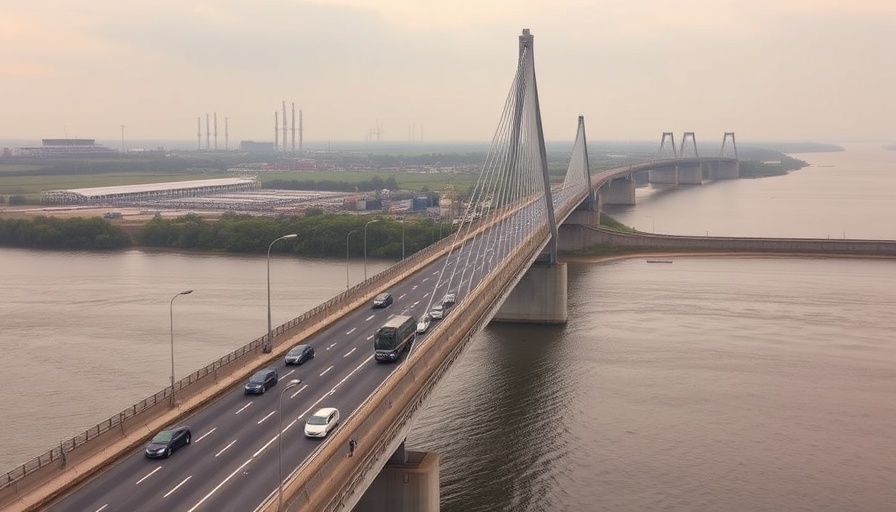
UK motorway expansion featuring bridge

The Slow Lane: Why the UK Only Built 65 Miles of Motorway in a Decade

In an era where speed and efficiency are paramount, the UK's dismal record of constructing just 65 miles of motorway over the last ten years stands as a glaring indictment of infrastructure policy. This troubling statistic not only reflects the nation's struggle with transport but also raises questions about its broader economic strategies and future growth opportunities.

Historical Context and Background

The UK has long prided itself on having an intricate network of roads and motorways, which serves as a backbone for its economy. Historically, the development of the motorway system began in the 1950s, and the country witnessed remarkable growth in road construction, allowing for improved transport of goods and travel. However, the last decade has revealed stark contrasts, where bureaucracy and aging policies have stymied new projects and dampened ambitions.

The Driving Factors Behind Limited Expansion

Several factors have contributed to the abysmal growth rate of the UK's motorway network. Firstly, there is a surge in environmental concerns that have shaped public and government attitudes towards new infrastructure. Additionally, financial constraints have led to prioritizing budgetary allocations for maintenance over expansion.

Moreover, political roadblocks—both at the local and national levels—have strained the approval process for new constructions, leading to ever-lengthening timelines for essential upgrades. This stagnation reveals a significant challenge for both current and future policymakers, who must balance ecological considerations with the demands of an aging infrastructure.

No Road Ahead? What This Means for Businesses

For businesses, particularly those reliant on transportation, the lack of motorways poses serious challenges. Slow logistical flows can impede operations, dampening productivity and increasing costs. As Bay Area startups and firms in Silicon Valley know all too well, swift transport infrastructure is critical for scaling operations and attracting venture capital funding. Every delay not only affects the bottom line but also undermines competitiveness against global counterparts.

Comparative Analysis with Global Trends in Infrastructure

When viewed through the lens of global infrastructure trends, the UK's struggle with motorway expansion is notable. Countries like China and India are rapidly developing comprehensive roadway systems that bolster economic activity and facilitate trade. The stark contrast serves as a wake-up call for the UK, which risks being left behind in a world where infrastructure is a key determinant of economic viability.

Potential Opportunities for the Future

The necessity for a modern transport framework offers several opportunities. Adopting innovative technologies such as smart motorway systems can enhance traffic flow and reduce congestion without the need for extensive new construction. Moreover, tapping into sustainable practices in business could kickstart conversations around integrating eco-friendly transport solutions.

Implications for Stakeholders and Decision-makers

Policymakers, local authorities, and industry leaders all have a role to play in determining the trajectory of the UK's transport infrastructure. Stakeholders must engage actively to push for regulatory reforms that can streamline approvals and promote public-private partnerships. Only through collaborative efforts can the UK chart a course toward revitalizing its transport systems and reclaiming its competitive edge on the global stage.

The failure to progress in constructing new motorways is not just an itinerary issue; it is representative of broader economic strategies that require urgent reevaluation. For Bay Area business leaders and entrepreneurs, the situation calls for intriguing discussions on resilience and adaptation in the face of infrastructural stagnation.

What are the broader implications of this limited expansion? It's time to reflect on how we can collectively influence change in the transport sector and prioritize sustainable, forward-minded growth.

Business News

2 Views

0 Comments

Write A Comment

*
*
Related Posts All Posts
08.19.2025

MAHA Movement: Transforming Supply Chains for Whole Foods and CPGs

Update MAHA Movement: A New Era for Supply Chains The Make America Healthy Again (MAHA) movement, championed by prominent figures like Donald Trump and Robert F. Kennedy Jr., is heralding a transformative era for U.S. consumer packaged goods (CPG) companies. As the industry braces for impending food regulations, organizations are reevaluating their supply chains, driven more by health-conscious consumer behavior than by tariff implications. Recent insights from Oisin Hanrahan, CEO of Keychain, an AI-driven sourcing platform, reveal that businesses are prioritizing shifts toward healthier product formulations, signaling a significant pivot in how companies operate and market their offerings. Natural Ingredients: The Rising Trend Keychain’s data highlights a steep increase in projects focused on “natural” ingredients, jumping from 6.81% in August 2024 to a remarkable 21.7% by February 2025. This marks a notable change in consumer preferences, as more companies recognize the importance of clean, organic labeling in their marketing strategies. According to Hanrahan, the perceived naturalness of ingredients is more than a trend; it's becoming integral to how brands connect with the increasingly health-focused consumer base. Adapting in Uncertainty: The Business Landscape In a rapidly shifting landscape, CPG companies find themselves eagerly adapting to meet the demands of the MAHA movement. Brands are not shy to overhaul their sourcing strategies entirely, with many even changing manufacturing partners to align with consumer expectations for healthier options. This is no small feat, considering the vast networks and relationships built over years. Yet, the potential rewards are substantial, as seen in reports of increased sales linked to these strategic transformations. Looking Ahead: Implications for the Future The MAHA movement is not merely a fleeting trend; it signals a broader shift in the industry towards sustainability and corporate responsibility. By prioritizing natural ingredients and cleaner labels, CPG companies can not only enhance their brand image but also contribute to a healthier society. This shifting paradigm invites businesses to rethink not just how they position their products, but also how they engage with customers on fundamental issues of health and wellness. Conclusion: The Shift's Broader Impact As the landscape of consumer behavior continues to evolve, understanding these dynamics becomes essential for businesses aiming to thrive in the modern market. The MAHA initiative, by influencing CPG company strategies, illustrates the power of consumer voices in shaping industry practices. For enterprises looking to stay ahead, embracing this movement could prove invaluable. For business leaders, now is the time to consider how shifting consumer preferences could impact your strategies. Are you ready to adapt and innovate with the growing demand for natural ingredients?

08.19.2025

Why the Triangle Motif in Nvidia's Headquarters is a Symbol of Innovation and Resilience

Update Nvidia’s Headquarters: More Than Just Steel and Glass Nvidia's impressive headquarters in Santa Clara, California, aren’t just state-of-the-art; they symbolize the company's evolution and its commitment to innovation. Comprised of two expansive buildings named Voyager and Endeavor, this $920 million campus reflects the very technologies developed by Nvidia itself. The headquarters combines advanced architecture and cutting-edge design philosophies, demonstrating the company’s achievements in the realm of graphics processing and its ongoing dedication to pushing technological boundaries. The Significance of the Triangle Motif At the heart of the design is an eye-catching triangle motif. Nvidia’s triangle-heavy scheme isn’t mere decoration; it is deeply rooted in the history of computer graphics. As the most basic polygon, triangles play a crucial role in 3D graphics, a reflection of the very foundation on which Nvidia built its legacy. Project manager Jack Dahlgren notes, "Our triangle motif here is really a reflection of the origins of the company." This symbolism extends beyond appearance; it encapsulates the company’s journey from early struggles to its current stature as a leader in the tech industry. A Journey Through Time: From Failure to Dominance Nvidia’s history is rife with lessons in resilience and adaptability. After an ambitious but unsuccessful foray into quadratic graphics with the NV1 chip, the company faced near calamity with the NV2’s cancellation. However, the transition back to triangle-based graphics led to the NV3, a turnaround that revitalized the company and cemented Nvidia’s position in the competitive realm of graphics processing. This narrative is not just about competition; it’s about learning from setbacks and leveraging them for future success. Technological Innovations at Play Nvidia’s new headquarters exemplify a broader trend in commercial real estate development, particularly within Silicon Valley startups. The utilization of machine-learning tools and custom visualization software during the building process is an innovative approach that aligns with the company's core operations and values. This brings to spotlight the crucial intersection of real estate development and digital transformation, showcasing how tech companies are cultivating environments that enhance collaboration and productivity. Conclusion: Silicon Valley’s Living Legacy In sum, Nvidia’s headquarters serve as a physical representation of the company's trajectory—from its early days of experimentation to its current position as a powerhouse in the tech industry. Business professionals can learn much from Nvidia’s narrative about the importance of innovation, resilience, and a strong connection between corporate culture and physical infrastructure. As Silicon Valley continues to evolve, Nvidia's headquarters stand as a beacon of how it is possible to weave together architecture, technology, and culture in ways that reflect both past achievements and future ambitions. Explore what it means to embrace such a culture, and consider how these lessons can be integrated into your own business practices.

08.19.2025

Market Uncertainty: Unpacking the Ghosts of 2007 and the Nifty 50

Update The Ghosts of 2007: Are We Facing Another Financial Crisis? The recent analysis from Bank of America (BofA) has raised the alarm bells among Wall Street observers, drawing striking parallels to the turbulent financial landscape of 2007. As the markets brace for a significant decision by the U.S. Federal Reserve on interest rates this September, financial strategists warn that we might be repeating a dangerous history. In their Liquid Insight report, BofA strategists point out that the Fed's potential rate cuts in the face of rising inflation disaster could echo the missteps leading up to the Great Financial Crisis (GFC). Economic Patterns Reemerge Howard Du and his team at BofA indicate that the intersection of declining interest rates amid increasing inflation is a rare and precarious situation, occurring just 16% of the time since 1973. This unusual climate suggests that monetary easing without a drop in inflation could trigger negative impacts similar to those during the 2007 meltdown, causing significant currency volatility and instability. Just as financial experts then warned of systemic risks, today's analysts are sounding the same alarm as rates are evaluated in a testing inflation context. The Nifty 50: Boom or Bust? The term 'Nifty 50' has resurfaced in discussions surrounding today’s mega-cap stocks, particularly those within the tech sector like Nvidia. These stocks have shown formidable performance over the past several years, mirroring the trajectory of the original Nifty 50 back in the 1970s. BofA's analysis suggests that while these large-cap giants have dominated, the tides could be shifting toward smaller companies and value stocks that tend to rise when the Fed begins to cut rates during tighter economic conditions. As history suggests, leaders today may not hold their titles in the future, spurring speculation on broader market leadership transitions. Broader Market Leadership Ahead? By examining past financial trends, BofA hints at a possible transformative moment for investors. Their timeline reveals that small-cap and value stocks have historically outperformed during economic recoveries, particularly when the perceived safety of large-cap stocks diminishes. Financial professionals need to prepare by considering shifts in portfolio strategy, as there could be a significant flow of capital escaping low-return cash positions into stocks with greater potential returns. Taking Action: What Can Investors Do? The insights from BofA underline the importance of vigilance among investors and market participants. By staying informed on potential shifts in economic bearings, and the evolving nature of market leadership, stakeholders can better equip themselves to navigate these uncertain waters. In times of brewing storms, understanding historical patterns lends power to proactive decision-making. Investors would do well to keep an eye on diverse sectors, from venture capital updates to sustainable business practices that enrich strong future growth strategies.

Terms of Service

Privacy Policy

Core Modal Title

Sorry, no results found

You Might Find These Articles Interesting

T
Please Check Your Email
We Will Be Following Up Shortly
*
*
*