Add Row
Add Element
cropper
update
Bay Area Business
update
Add Element
  • Home
  • Categories
    • Business News
    • Retirement Planning
    • Investing
    • Real Estate
    • Tax Planning
    • Debt Management
    • Bay Area Business Spotlight
    • Tech Industry Trends
    • How I got started
    • Just opened
    • Sustainability and Green Business
    • Business Financing
    • Industry Spotlights
    • Bay Area News
    • Bay Area Startups
  • AI Business Tech
April 01.2025
3 Minutes Read

The Astonishing 2,200% Leap of Newsmax Shares: What Investors Should Know

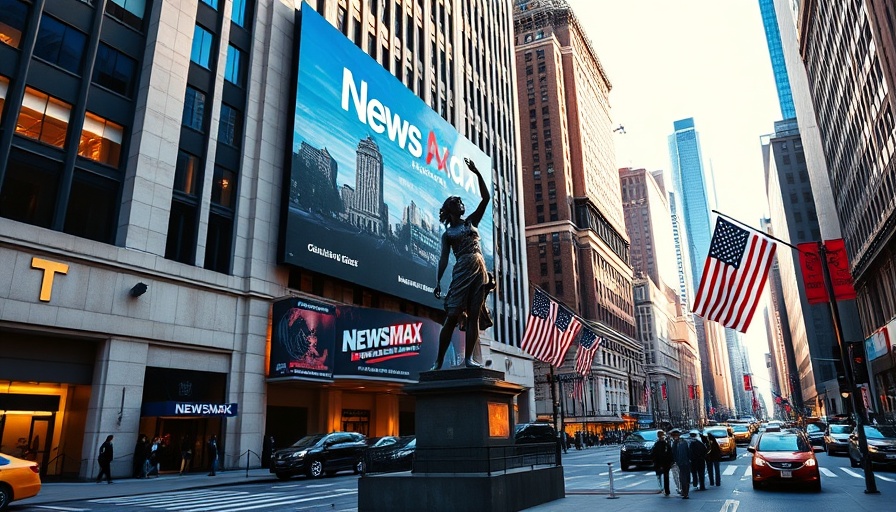
Newsmax shares rise 2200% at stock exchange with Fearless Girl statue.

The Meteoric Rise of Newsmax: A Financial Phenomenon

The shocking leap of shares for the Trump-friendly media outlet Newsmax—rising a staggering 2,200% following its debut on Wall Street—has sent ripples through both the financial and media landscapes. This surge not only highlights the potency of politically aligned investments but also raises important questions about the role of media influence in the financial markets.

Understanding the Surge: Political Influence in Finance

Newsmax's rapid ascent is emblematic of a notable trend where political narratives intertwine with financial success. Investors are increasingly drawn to companies that resonate with particular political ideologies, hoping to capitalize on their connections with influential figures like former President Trump. This phenomenon underlines a broader shift in how consumer behavior, particularly among conservative audiences, influences the financial markets.

The Market Impact of Political Media Ventures

The dramatic rise in Newsmax's share prices begs a closer examination of how media outlets are leveraging political affiliations for economic gain. In an era of polarized politics, media companies that cater to specific ideological bases have demonstrated the ability to forge robust financial paths, turning political alignment into substantial financial returns. This convergence of politics and finance is reshaping not only media consumption but also investment strategies.

Comparative Insights: The Rise of Other Political Media

Newsmax is not alone in its journey; other media organizations have similarly capitalized on political sentiments. The likes of OANN and Fox News have also witnessed significant financial success by appealing to their core audience’s values. This comparative analysis sheds light on a growing ecosystem of politically-driven media investment—a sector that is only set to grow as election cycles approach.

Future Predictions: What Lies Ahead for Newsmax and Similar Outlets?

The trajectory of Newsmax’s stock suggests a crucial trend: as the 2024 presidential election approaches, politically motivated media entities may see increased investments. Analysts predict that the ongoing alignment with figures like Trump could either bolster or destabilize their market positions, depending on public sentiment and political developments.

Challenges Ahead: The Post-Pandemic Media Landscape

Despite initial successes, Newsmax and similar outlets must navigate potential challenges, including shifts in consumer trust and increasing scrutiny over misinformation. As media companies pivot and adapt to changing consumer ethics and corporate responsibility expectations, their future will hinge on maintaining credibility alongside profitability.

Making Informed Decisions: Reflecting on Investment Trends

For investors, understanding Newsmax's rise serves as a case study in aligning personal values with financial goals. Students of market behavior must consider how ideological investments might shape broader market dynamics. Investors should also remain mindful of evolving consumer sentiments, which can swiftly alter the fortunes of politically aligned media companies.

Your Role as an Informed Investor

As we witness the blending of politics with financial ventures, it is crucial for stakeholders in the Bay Area and beyond to stay informed about these developments. Engaging with both economic trends and media narratives will empower investors to make well-rounded decisions, balancing ideology with sound financial principles.

In light of these insights, readers are encouraged to keep abreast of ongoing changes in both the media and the financial sectors, engaging with resources that analyze current events and their economic implications.

Business News

8 Views

0 Comments

Write A Comment

*
*
Related Posts All Posts
12.13.2025

How Altice's Massive Debts Impact JPMorgan and the U.S. Banking Sector

Update Understanding the Financial Tangle: JPMorgan and Altice In the complex world of finance, it’s not uncommon to see large banks entangled with corporations due to substantial debts. This has become particularly notable in the case of JPMorgan and Altice, a significant telecommunications player with a staggering €8.7 billion ($10.1 billion) debt. As the lines blur between investment opportunities and financial responsibility, the implications of Altice's massive liabilities are beginning to send shockwaves through the U.S. banking system. The Weight of Debt: What It Means Altice's financial strategy has been heavily scrutinized, particularly as it recently moved two of its units to shield them from creditors. This maneuver, guided by Merlyn Advisors—a hedge fund founded by former JPMorgan bankers—has raised eyebrows and drawn ire from existing debtholders. It exemplifies a critical issue in corporate finance: how far businesses will go to manage and mitigate their debts, often at the expense of trust and transparency. On the surface, such strategies may seem smart, but they can lead to deeper financial instability. Corporate Financial Strategies: An Examination With the advent of digital transformation in business, companies are seeking innovative solutions to manage their debts. In the case of Altice, shifting assets was a controversial way to secure new financing. Investors often look for strong corporate governance and sustainability in business practices, but maneuvering like this can undermine a company's credibility and raise doubts in the market. Broader Implications for U.S. Banking The entanglement of JPMorgan in Altice’s financial struggles may symbolize broader vulnerabilities within the banking system. If such large debts can ensnare financial giants, what does that mean for smaller banks or startups in the technology sector? The Bay Area, known for its thriving startup ecosystem, must watch closely. Economic forecasts suggest that a failure to maintain financial stability could stifle innovation and growth, leading to increased scrutiny from regulators. Businesses in the Bay Area, particularly Silicon Valley startups, often rely on venture capital to navigate their growth strategies. Disruptions in larger financial institutions could create unexpected ripple effects. Learning from Market Dynamics: The Importance of Transparency For entrepreneurs and those invested in the Bay Area business news, understanding the dynamics involved in these corporate maneuvers is crucial. Transparency in financial dealings strengthens relationships between companies and their investors. As these enterprises venture into increasingly complex funding strategies, knowing the risks associated with debt management is vital. Businesses should question whether they are fostering relationships built on trust or jeopardizing their long-term growth for short-term financial relief. Future Trends in Corporate Financing Looking forward, one can anticipate that the market will demand more accountability and transparency from corporations. This trend will likely lead to the emergence of stricter regulations governing corporate governance and financial disclosures, incentivizing companies to adopt sustainable business practices. For tech startups in particular, finding balance in their financial strategies will be key to navigating future challenges. Innovation must be paired with responsible funding to ensure the stability of both the business and the broader economic landscape. Call to Action: Keeping an Eye on Corporate Moves For anyone following the moves of major corporations or involved in the startup ecosystem, a vigilant approach is necessary. Stay informed about market trends, corporate governance issues, and the implications of financial maneuvers like those seen with Altice and JPMorgan. Understanding these dynamics can equip entrepreneurs and investors with insights to navigate the complexities of the business world effectively.

12.13.2025

Why the Decline of Letter Writing Matters in Digital Communication

Update The Diminishing Art of Letter Writing: An Introspective Journey In a world increasingly dominated by instant messaging and social media notifications, the practice of writing and sending physical letters is facing a decline that raises important questions about communication and connection. The personal touch of a handwritten note, a symbol of thoughtfulness and care, is yielding ground to the fast-paced digital interactions of our time. But what do we lose when we abandon letter writing? The Historical Significance of Letter Writing The art of letter writing has been a fundamental aspect of human connection for centuries, facilitating both personal and professional exchanges. As Elisabeth Lasch-Quinn notes in her observations on intellectual discourse, letters often carry a unique depth that other forms of communication cannot replicate. They invite reflection, deliberation, and an engagement of the senses—qualities that email and text communication frequently lack. The tactile pleasure of a handwritten letter, paired with the time and effort invested in its creation, adds value that a quick, typed message simply cannot provide. The Digital Shift: A Blessing or a Curse? As technology advances, communication preferences are shifting, leaving many traditional practices—like letter writing—on the fringes. For generations, letters served essential roles during life's pivotal moments—be it expressing profound love, sharing devastating news, or even guiding lost friends back into each other’s lives. Today, however, with the convenience of text messages and emails that uphold speed over sentiment, such rituals seem to be becoming relics of a bygone era. Yet, some experts argue that this transition may undermine emotional significance in communication, as noted by arts therapist Melanie Knight. She asserts that digital communication is “homogeneous” and often lacks the soul that handwritten letters once carried. The Psychological and Emotional Impact The act of writing a letter can be inherently meditative, allowing for a period of contemplation absent in the quick conversations of digital media. Lasch-Quinn highlights how composing a letter enables writers to explore their thoughts in depth, capturing moods and feelings that can evolve over time—something rarely afforded by the immediacy of digital messages. Research indicates that the experience of receiving a letter triggers a distinct psychological response compared to an email or text. Many individuals feel a sense of specialness when addressing an envelope, signaling a level of personal engagement that feels increasingly rare in modern communication. Future Prospects: Can Letters Coexist with Digital Communication? Looking ahead, the future of letter writing is uncertain yet intriguing. While physical letters may dwindle in everyday usage, their enduring value is likely to create a niche role in specific contexts. Certain opportunities for personal touch in professional settings may allow letters to remain relevant. As Peter Slattery of Monash University suggests, high-value communications—perhaps a personal letter to loyal clients—could stand out in a landscape saturated with emails, providing a memorable experience that fosters client relationships. Rethinking Communication: A Call to Action The discussion surrounding the decline of letter writing is not merely about nostalgia; it's a pivotal conversation about how we cultivate and maintain relationships in our increasingly digital world. As we navigate this era characterized by rapid technological shifts, it may be worth asking ourselves: what role do we want physical letters to play in our lives going forward? With thoughtful consideration, perhaps we can find a balance between embracing digital advancements while honoring the profound emotional connection that comes from a handwritten note. While digital communication offers convenience, the essence of personal connection lies in the effort and thought invested in physical letters—a connection that can make someone feel uniquely valued in a world that often feels rushed. To preserve this valuable tradition, we must actively choose to engage in letter writing, celebrating its legacy while simultaneously adapting to modern circumstances. In a world where communication can slip into the impersonal, let’s not forget the emotional richness that letters bring. Whether it's penning a note to a loved one or an important business associate, consider this a challenge to not only revive this ancient art but to redefine it in meaningful ways for the future.

12.13.2025

Membership Crisis: Labour Faces Steep Decline in Numbers

Update Labour Membership Decline: A Closer Look The aftermath of the recent general election has been marked by a significant collapse in Labour Party membership, highlighting a trend of disenchantment among the ranks of one of the UK's oldest political parties. Recent reports show a staggering decline, with approximately 309,000 current members—a drop of 11.4% from just a year ago—indicating a serious issue that party leaders must address if they want to rekindle grassroots support. Statistics Reveal a Bleak Picture Reports suggested that Labour has lost an average of one member every ten minutes since the election, amounting to over 9,500 departures between November and January alone. Alarmingly, youth membership, which once peaked at over 100,000 five years ago, has now dwindled to just 30,000. These numbers reflect a broader discontent among the party's base, particularly among young people who feel disconnected from the party’s current stance and policies. Key Factors Behind the Membership Decline Several reasons have been posited for this alarming trend. Detractors within the party have cited controversial political decisions, such as cuts to winter fuel allowances and a lack of criticism of figures like Donald Trump, leading to frustration among the base. Moreover, critics assert that a series of restrictive measures over the democratic rights of members, particularly regarding candidate selection, have further alienated potential supporters. These decisions raise critical questions about the party's leadership under Keir Starmer and its ability to unify diverse factions. Comparative Landscape: Other Political Parties Interestingly, while Labour struggles with membership decline, other political entities are seeing a rise. Reform UK, with its populist platform, reportedly possesses around 234,460 members, and the Liberal Democrats and Greens are both managing to retain or even grow their membership despite their smaller sizes. This serves as a stark reminder that while Labour once dominated the political scene, its current trajectory may open the door for other parties to capitalize on its vulnerabilities. The Financial Implications The drop in membership has significant financial ramifications for Labour. Following a record expenditure in the last election cycle, the party incurred a staggering loss of £3.8 million. With membership fees directly tied to party income, this decline could impede Labour’s ability to function effectively and fund campaigns. In contrast, smaller parties have seen a surplus, indicating that a leaner operation might be more sustainable amidst changing political times. Future Predictions: What Lies Ahead? The implications of Labour's declining membership could reshape the political landscape in the UK. Should the party fail to address internal issues, it might find itself in an even deeper crisis, while other parties could seize the opportunity to attract disillusioned voters. To avoid a downward spiral, Labour must not only reassess its policies and messaging but also focus on rebuilding trust with its core constituents. Cultural Significance of Political Engagement The drop in Labour membership reflects a broader cultural trend of political disengagement, particularly among young people. As reliance on social media grows, political engagement increasingly shifts online. This change presents both a challenge and an opportunity; parties can either engage with these new forms of interaction or risk becoming obsolete. Conclusion: Time for Action As Labour reflects on its membership statistics and financial health, it faces a stark choice: adapt and modernize its approach to political engagement and member relations or continue the trend of declining support. The future might be unpredictable, but the necessity for reform and renewed focus on grassroots interaction remains essential for Labour's survival and success.

Terms of Service

Privacy Policy

Core Modal Title

Sorry, no results found

You Might Find These Articles Interesting

T
Please Check Your Email
We Will Be Following Up Shortly
*
*
*