Add Row
Add Element
cropper
update
Bay Area Business
update
Add Element
  • Home
  • Categories
    • Business News
    • Retirement Planning
    • Investing
    • Real Estate
    • Tax Planning
    • Debt Management
    • Bay Area Business Spotlight
    • Tech Industry Trends
    • How I got started
    • Just opened
    • Sustainability and Green Business
    • Business Financing
    • Industry Spotlights
    • Bay Area News
    • Bay Area Startups
  • AI Business Tech
May 17.2025
2 Minutes Read

How the Taco Factor Influences Bay Area Market Trends

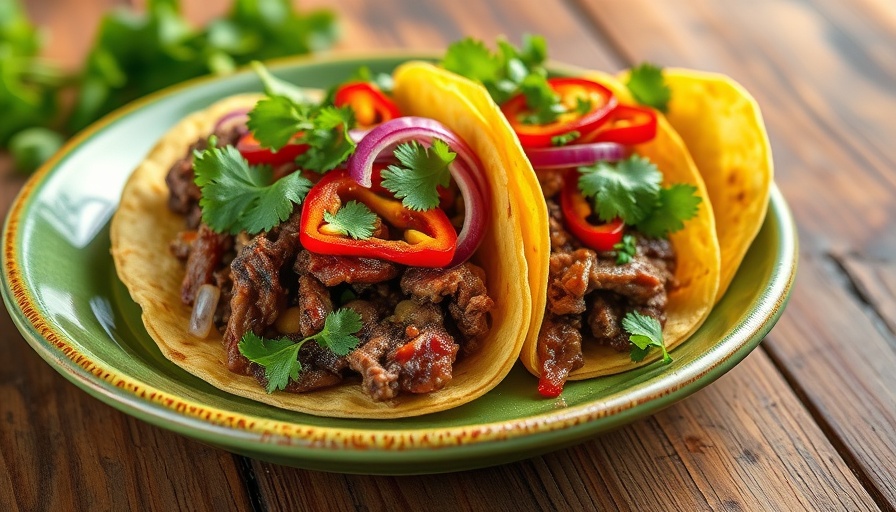
Vibrant tacos highlighting market influence.

The Taco Factor: A Surprising Market Influencer

The term ‘Taco factor’ has recently emerged as a new, whimsical metric influencing market trends, particularly in the tech and business landscapes. What began as a light-hearted reference to the popular food has turned into a symbol of the investor's appetite for growth and consumer engagement, especially in high-demand sectors, including Silicon Valley startups and other local businesses.

Understanding Market Sentiment

Market dynamics often hinge on consumer sentiment, and the ‘Taco factor’ encapsulates how lifestyle elements reflect economic activity. As social media and pop culture evolve, notions like the ‘Taco factor’ surface to summarize larger economic sentiments and consumer behaviors that investors are keen to track.

Relevance to Bay Area Businesses and Startups

In the Bay Area, where innovation intersects with consumer culture, businesses are increasingly tailoring their offerings in alignment with prevailing trends. Startups are leveraging quirky financial indicators like the ‘Taco factor’ to gauge buyer enthusiasm in the face of economic forecasts and competitive pressures.

Parallel Examples: The Food Economy and Business Insights

Other industries have previously seen whimsical terms become harbingers of market movements. For instance, during the rise of coffee culture, brands that incorporated socially-conscious sourcing and local engagement saw their stock values soar. Similarly, businesses responding to food trends have seen direct impacts on their valuations and market positions, reflecting how consumer tastes can catalyze financial opportunities.

Future Predictions: Food Trends and Market Dynamics

Looking ahead, the ‘Taco factor’ may shape more than just hospitality and food and beverage sectors. Companies outside of food—particularly e-commerce and tech firms—could adapt their strategies in response to changing consumer preferences illustrated by lifestyle trends. With the right insights, investors can capitalize on emerging market transformations in line with evolving consumer behaviors.

Actionable Insights for Business Leaders

Business leaders should keep a keen eye on engagement trends. By doing so, they can make strategic decisions that resonate more deeply with consumers. Incorporating data informed by cultural indicators, such as the ‘Taco factor’, enhances marketing strategies and aligns product offerings with consumer desires. Understanding these factors on a granular level can lead to better forecasting outcomes for corporate earnings and investments.

Corporate Social Responsibility: The Taco Factor's Deeper Meaning

Alongside financial metrics, the cultural implications of the ‘Taco factor’ speak to broader corporate social responsibility (CSR). Businesses embracing sustainability and ethical sourcing are becoming more aligned with modern consumer values, reflecting an industry shift towards eco-consciousness, a sentiment that influences market dynamics significantly.

Conclusion: Embrace the Unusual

The incorporation of cultural phenomena like the ‘Taco factor’ into market analyses is an invitation for businesses to think creatively about economic indicators. As the market continues to adapt to consumer interests, staying attuned to these evolving metrics offers strategic advantages. Embracing clever insights, models, and trends will equip business leaders to better navigate upcoming transitions in both the local and global economic landscapes.

Business News

11 Views

0 Comments

Write A Comment

*
*
Related Posts All Posts
03.06.2026

Why Luckin Coffee's Acquisition of Blue Bottle Signals the Future of Coffee

Update Luckin Coffee's Bold Acquisition of Blue Bottle Explained The coffee landscape is shifting dramatically, with the recent acquisition of Blue Bottle Coffee by Luckin Coffee marking a significant chapter in this evolving story. The deal, valued at around $400 million, showcases Luckin's aggressive strategy to establish itself as a formidable competitor against coffee titan Starbucks. This acquisition is not merely a financial transaction; it reflects a larger narrative about innovation and market dynamics in the global coffee industry. The Coffee Wars Heat Up Starbucks, with its extensive network of approximately 40,000 stores, has long dominated the coffee market, boasting revenues of $37 billion. Its current CEO, Brian Niccol, has been implementing a design-led turnaround strategy that is bringing customers back. However, Luckin Coffee, which has rapidly expanded its presence, now operates around 31,000 stores globally—representing a growth rate of 39% in just one year. Unlike Starbucks, which tends to focus on brick-and-mortar experiences, Luckin has harnessed the power of technology with a smaller store footprint and a strong emphasis on digital ordering. The Third Wave Coffee Movement Blue Bottle Coffee represents the third wave coffee movement—a concept that celebrates high-quality coffee through artisanal brewing methods and unique flavor profiles. This trend may have less traction with mainstream consumers, given the rising preference for quick, value-oriented options such as those offered by Dunkin’ and Tim Hortons. Even Starbucks has found its share of challenges in high-end coffee segments, illustrated by its closure of several "reserve" stores that catered to this market. The Future of Coffee Consumption The acquisition of Blue Bottle positions Luckin Coffee to tap into this niche at a time when consumer tastes are evolving. As iced coffee and convenience drinks gain popularity, influenced by modern urban lifestyles, the pressure is on for brands to innovate continuously. Luckin’s strategy suggests a willingness to experiment and adapt, essential tools in a saturated market where traditional players are feeling the heat. Conclusion: The Customer is Key This latest move in the coffee wars underscores the critical importance of understanding consumer behavior and market trends. While the $400 million price tag for Blue Bottle might seem steep, it symbolizes more than just financial investment; it represents a strategic alignment towards enhancing brand offerings. As competition heats up, staying aligned with consumer preferences—through effective branding and innovative product strategies—will be paramount for success. For readers keen on exploring the intersections of innovation in business and consumer behavior, now is the time to dive deeper into understanding these shifts within the coffee industry. What’s your take on this brewing rivalry?

03.06.2026

Wendy's Unveils $100K Chief Tasting Officer Role: Apply Now!

Update The Playful Shift in Fast Food Marketing Wendy’s has taken a bold step into the realm of brand engagement with its latest initiative—the search for a "Chief Tasting Officer" (CTO). Promising a six-figure salary of $100,000, this unique role is not just about taste-testing burgers; it’s about reshaping how fast-food chains engage with their audience through humor and personality. The fast-food giant is leveraging the growing trend of influencer marketing, urging applicants to showcase their creativity through entertaining video submissions. Understanding the Role of a Chief Tasting Officer At its core, the CTO position, albeit an independent contractor role, emphasizes the importance of content creation in modern marketing strategies. The selected individual will be tasked with creating engaging promotional videos that resonate with the company's youthful and playful ethos. As Wendy’s invites candidates to share why they should be the chosen CTO, they are not just hiring an extraordinary taste-tester; they are searching for a brand ambassador capable of creating impactful narratives around its offerings. Why Humor is Key in Brand Strategy Wendy’s has become notorious for its witty and humorous banter on social media, making bold statements about competitors while shining a light on its products. This move to hire a Chief Tasting Officer not only amplifies its comedic marketing approach but also enriches its brand storytelling. By poking fun at traditional employment roles through its job advertisement, Wendy's transforms recruitment into an entertaining experience, significantly increasing engagement. Broader Implications for Fast Food Industry Trends Wendy's initiative comes at a time when the fast-food industry is looking to innovate beyond menus. The intersection of food culture and content creation has given rise to a new era referred to as the "creator economy," where consumers now expect brands to entertain and inform. The clever branding strategy employed by Wendy’s not only makes a strong statement but sets a precedent for how companies should approach marketing in an age driven by social media influences. Consumer Engagement through Content Creation The Chief Tasting Officer contest reflects a significant trend in digital transformation where audiences want to be more than just passive consumers; they expect to actively participate in the brand experience. By utilizing Instagram and TikTok as platforms for video submissions, Wendy’s taps into the vibrant communities already cultivated on these networks. This strategy not only aligns with current advertising trends but also demonstrates the expanding role of digital platforms in restaurant marketing strategies. Conclusion: Embrace Your Creative Side Wendy's unique approach to hiring illustrates the evolving landscape of marketing, driven by creativity, humor, and consumer interaction. For those interested in competing for the role of Chief Tasting Officer, now is the time to unleash your inner foodie and showcase your personality. Submissions for the contest close soon, so don't miss out on the chance to possibly lead the fast-food company's content revolution!

03.06.2026

The Game-Changer: Why Apple’s $599 MacBook Neo is so Significant

Update The Affordable Evolution: Apple’s MacBook NeoApple has long held a reputation for premium pricing, yet the recent launch of the $599 MacBook Neo heralds a significant shift in its strategy. This entry-level laptop not only targets students and small businesses but also seeks to compete directly with budget-friendly laptops like Chromebooks, which dominate the education sector.Breaking Barriers with AccessibilityBy pricing the MacBook Neo at just $599 for consumers and $499 for educational institutions, Apple aims to dismantle the barriers that have traditionally kept their products out of reach for many. This model is reminiscent of their successful Mac Mini, which began at $499—and served as an entry-point for many into the Apple ecosystem. With its attractive pricing and features such as a 13-inch Liquid Retina display and built-in AI capabilities, the Neo invites both newcomers and seasoned Apple fans to explore its offerings.Colors That Resonate with UsersAvailable in vibrant colors such as the nostalgic Citrus and Blush, the MacBook Neo reflects Apple’s commitment to both aesthetics and functionality. This design choice not only draws in consumers looking for a functional laptop but taps into emotional connections, harkening back to the colorful iMacs of the 1990s.Strategic Positioning in the MarketAccording to industry experts, the Neo represents one of Apple’s most significant product announcements in years, signaling a shift in how the company positions its MacBook offerings. Francisco Jeronimo from IDC emphasized that this entry-level price point opens the door to a broader audience, ultimately expanding Apple’s ecosystem. By lowering the entry barrier, Apple hopes to increase user engagement and service subscriptions, aiming for greater market share within a highly competitive landscape.Future Trends in Apple’s Product LineLooking ahead, Apple’s integration of AI technologies in its devices, including the Neo, points towards ongoing innovation. As AI capabilities evolve, they will likely enhance user experience across the board, making consumer interactions simpler and more intuitive. This integration is part of a larger trend in the tech industry, where AI and automation shape the future of product design and usability.Why It Matters: A Chance for Every UserThe launch of the MacBook Neo is more than just a pricing tactic; it symbolizes a transformation within Apple’s brand identity. As the tech landscape shifts, understanding consumer trends becomes crucial. With a focus on inclusivity in technology, Apple is not just offering a product but also a chance for more users to connect with its ecosystem. This move towards affordability represents a newfound commitment to making technology accessible to all demographics.

Terms of Service

Privacy Policy

Core Modal Title

Sorry, no results found

You Might Find These Articles Interesting

T
Please Check Your Email
We Will Be Following Up Shortly
*
*
*